


Your First Climate Chamber Purchase Made Simple: 10 Practical Tips
Purchasing your company’s first climate chamber can be challenging. For procurement managers or buyers new to environmental reliability testing, navigating technical jargon, complex datasheets, and vast price differences often leads to costly mistakes. Buying the wrong equipment can result in inaccurate test data, non-compliance with industry standards, or a machine that physically does not fit your facility.
To ensure a smooth procurement process and a secure investment, here are 10 practical, field-tested tips to help you choose the right environmental test chamber.
Tip 1: Define Your Test Standards Before Looking at Specs
Do not approach a manufacturer with a generic request for a "temperature and humidity chamber." In industrial testing, everything is governed by specific standards (such as IEC 60068, MIL-STD-810, ASTM, or automotive standards like LV 124).
Before talking to sales representatives, ask your engineering or quality control team for the exact standard numbers required for your products. Different standards dictate vastly different temperature ranges, humidity levels, and change rates. Knowing your standards prevents you from overpaying for unnecessary capabilities or buying an underpowered machine.
Tip 2: Calculate the "Heat Load" of Your Test Samples
This is the most common oversight made by first-time buyers. There is a critical difference between testing a passive object (like a piece of plastic) and an active object (such as electronic components that are powered on during the test).
Active samples generate heat, known as the Heat Load (measured in Watts). This heat actively counteracts the chamber's cooling system. If you do not specify your sample's heat load to the manufacturer, the chamber may fail to reach its lower temperature limits during live testing.
Tip 3: Don't Confuse "Internal Dimensions" with "Effective Test Space"
If your test sample is 50cm x 50cm x 50cm, you cannot buy a chamber with those exact internal dimensions. Climate chambers rely on precise internal airflow patterns to maintain temperature and humidity uniformity.
As a rule of thumb, your test samples should not occupy more than 1/3 to 1/2 of the chamber's internal volume. Furthermore, you must leave a clearance of at least 10 to 15 cm between the samples and the chamber walls to allow proper air circulation. Blocking the airflow results in localized temperature inaccuracies and invalid test data.
Tip 4: Choose the Right Cooling Method: Air-Cooled vs. Water-Cooled
Climate chambers generate significant heat while lowering internal temperatures. You must choose how the refrigeration system dissipates this heat:
-
Air-Cooled: Relies on ambient room air. It is easier to install but dumps heat directly into your laboratory, requiring robust building HVAC systems.
-
Water-Cooled: Uses an external water cooling tower or chiller system. It runs much quieter and keeps the lab cool, but it requires dedicated plumbing infrastructure.
Evaluate your laboratory's current ventilation and utility setup before deciding.
Tip 5: Verify Critical Component Brands (The Compressor & Controller)
A climate chamber is a long-term capital investment expected to last over a decade. Its reliability depends entirely on its core components. Always ask the manufacturer for the specific brands used in the refrigeration and electrical systems.
High-quality chambers typically utilize top-tier, globally recognized brands for compressors (such as Tecumseh or Bitzer) and PLC controllers. Choosing a machine with unbranded components might save you money upfront, but finding replacement parts or local technical support later will become a major logistical issue.
Tip 6: Inspect the Quality of the Insulation and Seals
Energy efficiency and operator safety depend on the chamber’s construction. High-performance chambers use high-density polyurethane foam combined with glass fiber insulation to prevent thermal loss.
Pay close attention to the door gasket. A single, flimsy seal will degrade quickly under extreme temperatures, leading to frost buildup, humidity leaks, and increased energy consumption. Look for industrial-grade, multi-layer silicone door gaskets that maintain flexibility and tight sealing from -70°C up to +180°C.
Tip 7: Double-Check Your Laboratory’s Electrical Configuration
Environmental test chambers—especially those featuring fast temperature change rates or large volumes—require substantial electrical power. Small benchtop models might run on standard single-phase power, but industrial-sized chambers almost always require 3-phase industrial power (e.g., 380V/415V, 50Hz/60Hz).
Consult your facility’s electrician to verify your available voltage, frequency, and amperage before finalizing the purchase order to avoid expensive facility retrofitting costs.
Tip 8: Understand Calibration and Compliance Requirements
If your company is certified under ISO 9001, IATF 16949, or other strict quality management systems, your climate chamber must undergo regular independent calibration (usually annually).
When evaluating equipment, verify that the controller interface allows for multi-point calibration adjustments (offset values). Additionally, ensure the chamber includes dedicated, easily accessible validation ports (cable holes) so third-party calibration technicians can safely insert external sensors without damaging the door seals.
Tip 9: Measure the Complete Delivery Route and Floor Load Capacity
Because of the heavy steel frames, thick insulation, and heavy compressors, industrial climate chambers are exceptionally heavy and bulky.
Before placing an order, map out the entire delivery path from the unloading dock to the final laboratory space. Measure the height and width of every doorway, hallway corridor, and elevator. Additionally, verify the floor load capacity (kg/m2) of your laboratory, especially if the equipment is slated for installation on an upper floor.
Tip 10: Value Long-Term Technical Support Over the Lowest Initial Price
In the B2B machinery market, the lowest price often signals a lack of after-sales infrastructure. A climate chamber is a dynamic mechanical system that will eventually require maintenance, sensor calibration, or refrigerant top-offs.
When choosing a supplier, confirm that they provide comprehensive documentation in English, including clear electrical/refrigeration schematics and user manuals. Ensure they offer remote video diagnostic support and utilize standard, globally accessible wear-and-tear parts. A slightly higher initial investment in a reputable manufacturer will save thousands of dollars in downtime later.
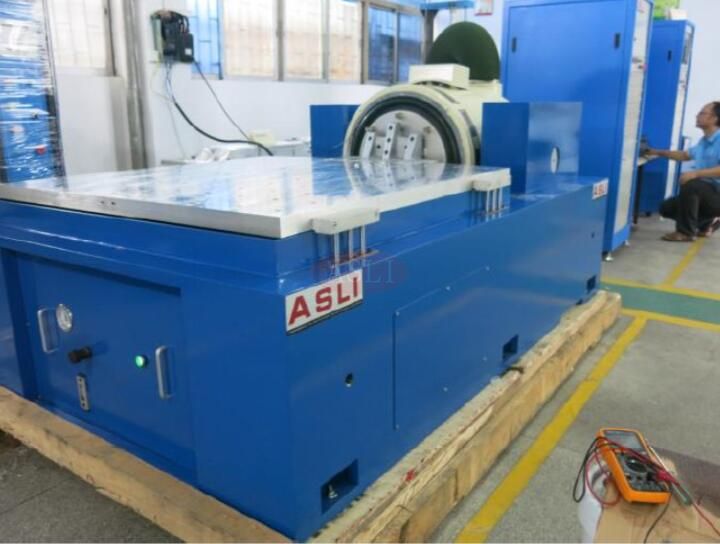
MIL STD 810G Vibration Testing Machine For Electrical Appliances