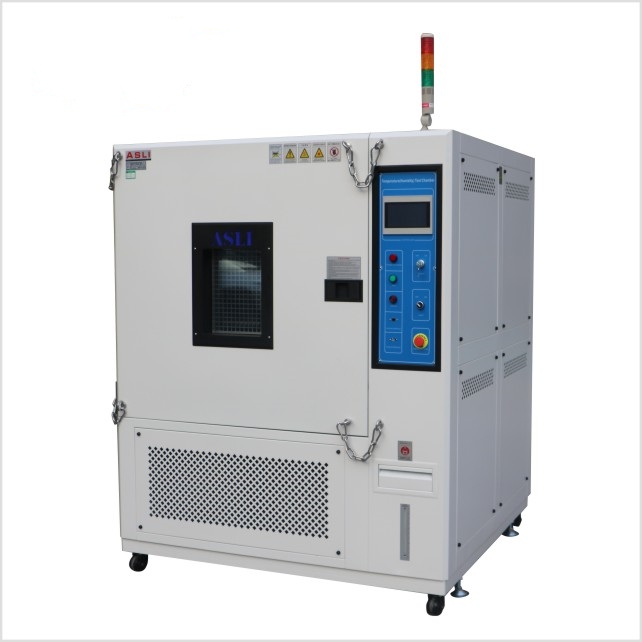
With the rise of lithium battery testing demands, battery explosion-proof chambers (often integrated with temperature and humidity test functionality) are becoming essential for R&D and quality assurance labs. This guide walks you through the key specs, supplier vetting, and risk control strategies when sourcing from China.
I. Core Parameters and Technical Evaluation Criteria
Explosion-Proof Performance & Structural Design
-
Material: Prefer SUS304 stainless steel or ≥2mm cold-rolled steel with inner flame-retardant layers.
-
Pressure Relief System: Include automatic relief doors (≥300×300mm) and smoke-compliant exhaust units.
-
Safety: Explosion chains, dual-seal doors, and optional fire suppression systems are standard.
Temperature & Humidity Control
-
Temperature Range: -40°C to +150°C, fluctuation ≤±2°C, uniformity ≤±3°C.
-
Humidity Range: 20%-98%RH, accuracy ±5%RH. Ideal for cyclic damp-heat testing.
-
Ramp Rate: 1–3°C/min. Avoid higher unless required.
Compliance & Certification
-
International: UN38.3, IEC 62133 are essential.
-
China: GB 31241 and GB/T 31485 standards must be met.
-
Factory: Prioritize ISO9001-certified manufacturers; CE is vital for EU markets.
II. Procurement Considerations
Supplier Screening
-
Ask for test reports (temperature uniformity, explosion-proof response).
-
Use video audits to inspect welding, door structure, and control systems.
Quality Verification
-
Test temperature stability, humidity accuracy, and pressure relief function.
-
Use branded components like PT100 sensors and Tecumseh compressors.
III. Negotiation Strategies & Risk Mitigation
Technical Clauses
-
Include third-party test results as acceptance criteria.
-
Allow relaxed tolerances (e.g., ±5%RH) to reduce cost
Cross-Border Risk Control
-
FOB shipping with anti-shock and moisture-proof packaging.
-
Request CE (EU) or UL 1642 (U.S.) certifications.
IV. After-sales Service & Localization
-
Insist on English manuals and video installation guidance.
-
Arrange remote calibration every 6 months and stock consumables.
-
Ensure CSV data export and easy-use monitoring software.
V. Factory Compatibility & Installation Planning
Site Planning
-
Measure space: L×W×H (including ceiling height). Leave ≥80cm for maintenance.
-
Check access routes—if unit width > 90cm, plan for modular transport.
Cooling Tower & Piping
-
Cooling tower ≥1.5m from machine, 50cm maintenance clearance.
-
Air duct diameter Φ150–300mm, use steel sleeves for wall penetration.
Supplier Coordination
-
Ask for CAD layout or 3D model showing equipment and piping positions.
-
Contract must clarify who handles site rectification if non-compliant.
Special Scenarios
-
Use vertical/side-exhaust design in tight spaces.
-
If installing multiple units, leave a 1.2× unit width gap; upgrade exhaust fans by 30% if shared.
Pre-installation Checklist
-
Verify: equipment width vs. doorways, ducts vs. beams, cooling drain vs. site drainage.
-
Final acceptance must test door angle ≥90° and duct wind speed ≥12m/s.
Chinese suppliers have matured in the production of explosion-proof test chambers, especially for lithium battery applications. Stick to core needs—temperature/humidity control, structural safety, and post-sales support. Use phased payment, demand test reports, and prioritize manufacturers with export experience and customization capability.
Need a professional supplier? ASLi Testing provides certified explosion-proof chambers tailored for battery R&D. Contact us via marketing@aslitesting.com.