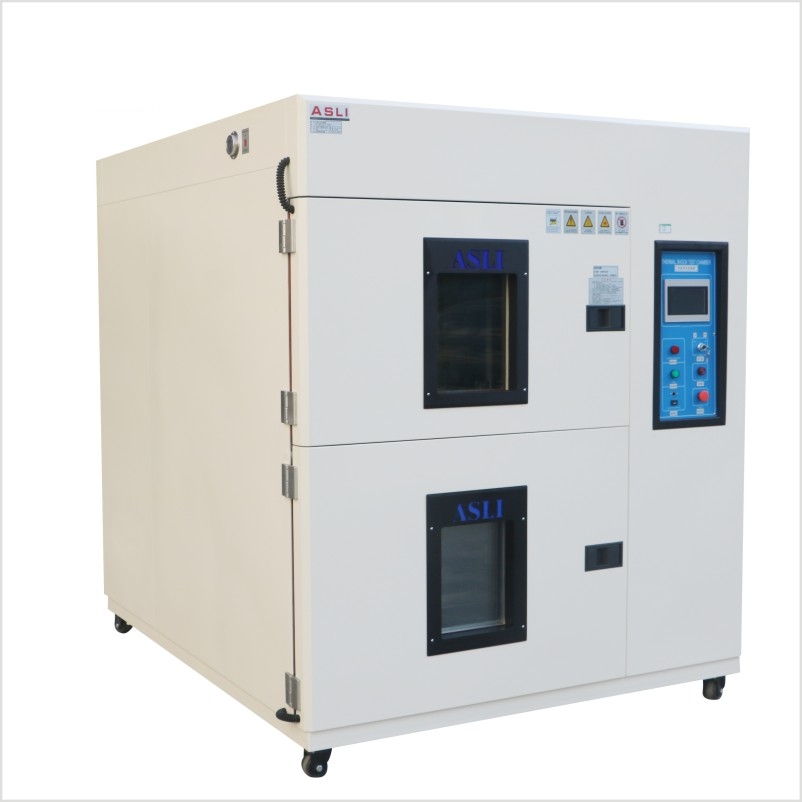
Thermal Shock Chamber vs. Temperature Humidity Chamber: What is the Difference?
When selecting environmental testing equipment, buyers often confuse a Thermal Shock Chamber with a standard Temperature and Humidity Test Chamber. While both control temperature, they serve completely different testing purposes.
Here is a simple, practical comparison to help you choose the right machine for your lab.
1. Gradual Conditioning vs. Instant Shock
Temperature Humidity Chamber (Gradual Change): This chamber changes temperature slowly (typically 1°C to 3°C per minute). It simulates long-term environmental exposure, such as a product sitting in a hot warehouse or enduring a seasonal climate shift.
Thermal Shock Chamber (Instant Change): This chamber introduces extreme temperature differences in seconds. It utilizes separate, isolated hot and cold zones. By opening internal pneumatic dampers, it blasts the product with an instant transition from hot to cold to simulate sudden environmental drops or re-entry stress.
2. Different Failure Modes Detected
Temperature Humidity Chamber: Used to check for long-term defects like moisture absorption, rusting, insulation degradation, and slow material aging.
Thermal Shock Chamber: Used to expose immediate mechanical structural flaws. It forces rapid material expansion and contraction to see if components will crack, sealings will leak, or solder joints on PCBs will instantly fracture.
3. Industry Applications
Standard Chambers are perfect for routine quality checks on packaging, plastics, textiles, and standard electronics.
Thermal Shock Chambers are essential for rugged, high-reliability industries such as aerospace, military electronics, automotive components, and semiconductor packaging where products must survive immediate, harsh ambient changes.